- Hawook: Your Southeast Asia Property Insider
- Posts
- Bangkok is pricing like it's 2018 again. Here's the split.
Bangkok is pricing like it's 2018 again. Here's the split.
Q2 Bangkok condo launches averaged 150,420 THB/sqm. The rest of the city sat at 90K. That gap is the story this week.

Maya Chen
July 21, 2026

The Hawook Weekly
Bangkok is Pricing Like It's 2018 Again
The Sukhumvit corridor surges to 150K THB/sqm while the rest of Bangkok stagnates. Malaysia dangles its biggest tax carrot yet. And a Phuket project with real dual-beach access lands on the Hawook platform.
Tuesday, July 21, 2026 | View Archive
Got a question about a market or a project?
Message us on WhatsApp for a fast answer, or fill out our quick form and the team will come back to you within 24 hours.
There is a story hiding inside Bangkok's property data this week, and it is not the one most headlines are telling. Yes, developers are pulling back hard. Yes, permits are down. But simultaneously, the price of newly launched condominiums in the premium transit corridor just hit a number that Bangkok has not seen since the peak of the Chinese buyer boom in 2018. Two things are true at once, and understanding both is what separates an informed buyer from one who reads the headline and draws the wrong conclusion.
Meanwhile, Malaysia is quietly structuring the most competitive tax environment in Southeast Asia for qualified companies and professionals inside the Johor-Singapore Special Economic Zone, even as its headline residency programme continues to frustrate the buyers it claims to want. Vietnam's largest developer is attracting serious institutional capital for the first time in years. Singapore's office market is tighter than it has been in over two years. And in Bali, the government's crackdown on unlicensed short-term rental operators is handing a yield windfall to anyone who built their operation the right way.
A lot to get through. Let's go. 👇
Main Story
🏙️ Bangkok's Two-Speed Condo Market: One Corridor Near Its All-Time Peak, Everything Else Frozen
The headline number from Bangkok's property market this half-year is deceptively tidy: average newly launched condominium prices across Greater Bangkok reached 120,364 baht per square meter in the first six months of 2026, which Cushman and Wakefield data reported by the Bangkok Post places just below the 2018 historic peak of 126,373 baht/sqm. On the surface, that reads as a healthy market. The reality, once you look at the quarterly breakdown, is considerably more interesting.
In Q1 2026, the average dropped to 90,308 baht/sqm as mass-market suburban launches dragged the aggregate down. Then Q2 shot to 150,420 baht/sqm, because developers launched almost 90% of new projects in a single corridor: premium units along the Sukhumvit BTS skytrain line. The swing between those two quarters is not a story about Bangkok getting more expensive. It is a story about developers increasingly refusing to launch anything that is not premium and transit-adjacent, because that is the only product category where demand is still showing up reliably.
The Bangkok Split in Numbers
Sukhumvit corridor launches (Q2 2026): avg 150,420 THB/sqm
Suburban / outer Bangkok (Q1 2026): avg 90,308 THB/sqm
2018 historic peak: 126,373 THB/sqm
H1 2026 blended average: 120,364 THB/sqm (+9.4% vs end-2025)
The structural driver matters here. REIC data published by Nation Thailand shows condominium construction permits collapsed 71.3% year-on-year in Q1 2026, and land allocation permits fell 45.7% nationally. Developers are not launching because demand is strong across the board. They are launching selectively in the one geography where pricing power still exists, and they are protecting that pricing by keeping supply tight everywhere else.
There is a separate pressure building underneath this. Developers have flagged that Thailand's land revaluation baseline is scheduled to reset in 2027, which will increase the cost basis for new projects and likely push launch prices higher once that cycle kicks in. The implication for buyers considering Bangkok is that the current pricing window, where units are launching at or just below 2018-equivalent values without the speculative froth of that era, may close faster than expected.
Hawook's Read 🔍
The bifurcation is real and not going away. Buying a Sukhumvit-corridor unit at 150K THB/sqm requires believing in premium pricing durability in a slowing economy. The risk is concentration: if foreign buyer demand softens further (Kasikorn Research projects foreign condo purchases down 20% for 2026), the corridor most exposed to that slowdown is exactly this one.
Ready-to-move units in the 100K-120K THB/sqm band in proven transit nodes offer a cleaner entry point with less execution risk than off-plan launches at the Q2 peak price. The 0.01% transfer fee window runs until June 2027, which is the live incentive for buyers who are already in advanced stages of decision-making.
The foreign buyer side of this story is its own chapter. Kasikorn Research projects a 20% decline in foreign condo purchases for 2026, the first annual contraction since the pandemic. Bangkok itself saw a 35% year-on-year drop in foreign transfers in Q1, driven by weakening Chinese and Myanmar buyer pools. Provincial resort markets, where European buyers are still active, are showing more resilience. Separate your Bangkok thesis from your Phuket or Koh Samui thesis: they are currently running on different engines.
Secondary Story
🇲🇾 Malaysia's Johor-Singapore SEZ Is Running Two Competing Messages at the Same Time
On one side of the Causeway, Malaysia is offering some of the most aggressive tax incentives in Southeast Asia for companies and professionals setting up inside the Johor-Singapore Special Economic Zone. Qualifying businesses in high-tech manufacturing, medical devices, and global service hubs can access a corporate tax rate of 5% to 15% for up to 15 years under the newly enacted JS-SEZ framework. Qualified foreign professionals working inside the zone get a flat 15% income tax rate for 10 years, which is structurally below what Singapore charges most expatriate employees.
On the other side of that same headline, The Star reports that Malaysia's revised MM2H programme is losing traction precisely because it is asking the buyers it claims to want to clear financial hurdles that the country's regional competitors do not require. The updated tiered structure mandates high fixed deposits alongside compulsory property purchases starting at RM 600,000 for the Silver tier and RM 1 million for Gold, with a 10-year resale restriction attached to those property holdings. That 10-year lock-up clause is arguably the most deterring element: for investors who view property as a rebalanceable asset, not a permanent anchor, it turns a residency play into something closer to illiquid capital commitment.
Two Malaysia Entry Tracks for Cross-Border Buyers
JS-SEZ Professional Track: 15% flat income tax for 10 years. Requires employment or business setup within the SEZ. Strongest for operators, founders, and employees relocating a function.
MM2H Silver Tier: Fixed deposit required, minimum property purchase RM 600,000, 10-year resale restriction. Designed for passive residency, but the lock-up discourages investors who want optionality.
Bottom line: Johor is the active play. MM2H is the passive one, and it is increasingly competitive only if you genuinely intend to live in Malaysia long-term.
The industrial land market in Johor is responding to the SEZ enthusiasm. The Edge Malaysia reports that Paragon Globe has committed RM 127.3 million to acquire land destined for a RM 1.69 billion Sedenak Industrial Park, signaling that serious capital is betting on the SEZ supply chain buildout. Logistics and manufacturing infrastructure demand in the corridor is real and growing. The residential property play in Johor is a downstream consequence of that institutional activity, not the cause of it, and that sequencing matters for timing an entry.
Critics of the MM2H revision are flagging that frustrated middle-class buyers are looking at Australia and Canada as alternatives, which offer direct permanent residency pathways that Malaysia does not. Whether that criticism prompts a revision is unknown; the scheme has been adjusted multiple times in recent years, and its current configuration reflects deliberate policy intent rather than accidental design. For buyers who have been watching MM2H, the honest read is: it works if your goal is genuine long-term Malaysian residency. It is not a flexible holding structure for investors who might want to exit in five years.
Project Spotlight on Hawook
🌴 Rhea by Sansiri: Dual-Beach Access, Clean Title, and a Realistic Yield Range
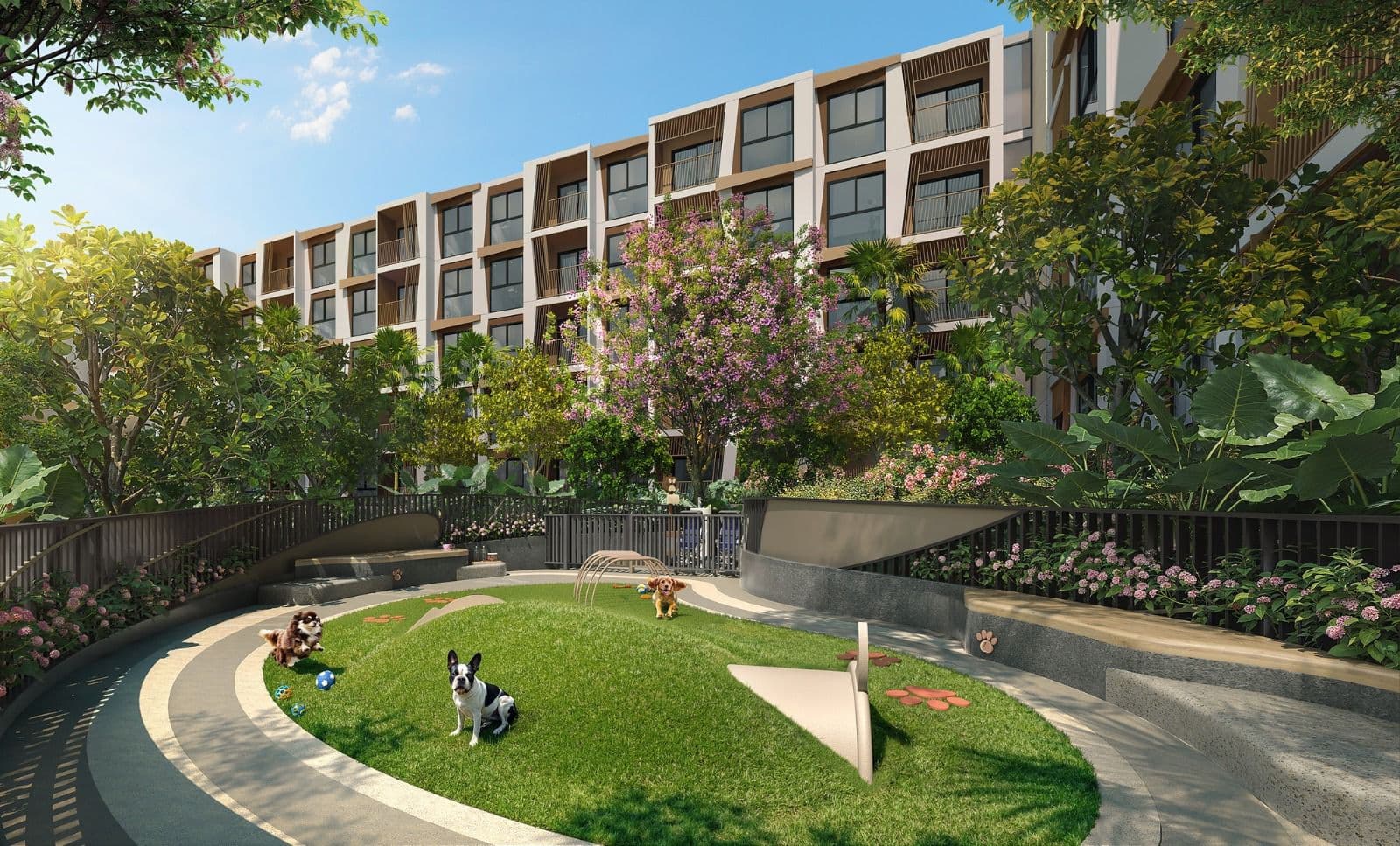
Rhea by Sansiri lands as one of the more interesting Phuket launches in this cycle for buyers whose priority is location quality and long-term living over short-term yield maximisation. The project sits walkable to both Surin and southern Bang Tao Beach, which is genuinely rare on the west coast. The low-density 5-storey design is built around a 900-sqm landscaped lagoon, delivered fully fitted with furniture, appliances, and a year of PLUS Concierge service at handover.
Hawook's Honest Take
Pricing: ฿143K-฿186K/sqm. At parity or slight discount to sister project CANVAS Cherngtalay despite Rhea's materially better coastal position.
Legal foundation: Chanote title, EIA approved 30 March 2026, SET-listed developer. Among the cleanest structures you will see in Phuket off-plan.
Trade-offs to know: The 23-metre west-coast height cap means no sea views. Upper floors get filtered tree-line glimpses at best. Handover is November 2027, an 18-month wait. Realistic net rental yield sits at 3.2-4.3%, not the higher Bang Tao condotel numbers.
Unit selection matters: Ground-floor pool-access units trade light and privacy for direct lagoon connection. Upper-floor units flip that trade-off.
Foreign quota: Approximately 30% remaining as of mid-2026. Moving.
For lifestyle buyers, pet-friendly households, and long-term residents who value scarcity over volume, Rhea is one of the more considered launches this cycle. Investors chasing 5% gross yields should look at Bang Tao condotel stock instead. For everyone else, this is worth a closer look.
View Rhea by Sansiri on HawookRegional Market Update
🌏 Singapore and Cambodia: Office Markets Tighten, Infrastructure Moves Fast
🇸🇬 Singapore: CBD Office at a Nine-Quarter Low, Residential Stabilises
Singapore's Grade A CBD office vacancy fell to 5.6% in Q2 2026, a nine-quarter low, as financial services, wealth management, and insurance companies continued absorbing premium space. JLL, as reported by Real Estate Asia, expects rental growth of 4% to 6% for the full year, supported by the fully completed Circle Line MRT loop that opened in July 2026 and is projected to lift accessibility and rents in previously underserved nodes.
On the residential side, URA flash estimates covered by Real Estate Asia show private home price growth easing to 0.5% quarter-on-quarter in Q2, down from 0.9% in Q1. Landed prices rebounded 2.6% while non-landed slipped 0.1%, confirming that the market is in a stable, two-speed consolidation rather than a broad correction. 2,116 new private homes were sold in the quarter, consistent with healthy underlying demand.
🇰🇭 Cambodia: Bridge Progress and a Digital Land Registry
Two pieces of Cambodia infrastructure news worth tracking. The Bassac River Bridge connecting Chak Angre Krom and Prek Pra in Phnom Penh reached 79% completion as of early July 2026, with the project on pace to relieve significant congestion in the southern corridors and support surrounding residential development. That is relevant for buyers tracking land values in the southern districts of the capital.
Separately, Cambodia's Ministry of Land Management has launched a digital real estate transaction portal that removes the requirement for village and commune heads to participate in property transfers. This is a meaningful bureaucratic simplification that shortens the verification chain for title transfers. For foreign buyers working through agents, it reduces one layer of potential delay and creates a cleaner audit trail. The IMF lowered Cambodia's 2026 GDP growth forecast to 3%, and the Macroeconomic Stability Committee's internal projection sits at 2.5%, so this infrastructure modernisation is arriving against a backdrop of genuine economic caution.
Personal Finance Hack
💡 Thailand's 2027 Land Revaluation: What the Baseline Reset Means for Your Entry Price
Here is a structural pricing mechanic that does not get enough attention in the consumer coverage of Thai property. Thailand's land department periodically resets the official appraisal baseline for land values, and that reset is scheduled for 2027. When the baseline moves up, the cost floor for new project land acquisition rises, and developers pass that through to launch prices.
Developers have already begun flagging the 2027 revaluation as a potential risk to market recovery, noting that it could widen the affordability gap for first-time buyers and push entry-level launch prices higher in the Bangkok metro area. Industry sources cited by Nation Thailand are warning that the revaluation could deepen the property slump if it lands before the market has fully absorbed its current inventory overhang.
What This Means for Buyers Right Now
1. Ready-to-move inventory purchased before the 2027 baseline reset captures current pricing and the 0.01% transfer fee window simultaneously. That combination will not repeat.
2. Off-plan launches scheduled for completion after 2028 may reflect the new, higher land cost basis in their asking prices, which means today's off-plan price could look cheap in retrospect relative to equivalent future launches.
3. The revaluation affects Bangkok and major provincial markets. Island and resort markets like Phuket and Koh Samui are driven more by foreign demand dynamics and land scarcity than by the official appraisal baseline, so the same mechanic applies differently there.
Not financial advice. This is a market mechanic worth understanding before you make a decision, not a directive to act. Consult qualified advisors before committing capital.
Around the Region
⚡ Quick Hits
🇻🇳 Vietnam: Vinhomes Attracting Serious Institutional Capital
Vietnam's largest developer is drawing meaningful interest from global institutional investors, per a Vietnam News report. The draw is Vinhomes' demonstrated ability to execute integrated townships exceeding 300 hectares with fully operational schools, hospitals, and transit infrastructure already in place. That operational track record is differentiating as global capital shifts away from speculative, leveraged developers toward operators who can actually complete and run what they promise.
🇹🇭 Bangkok: Retail Giants Turning Mall Refits Into Residential Catalysts
The Mall Group is investing over 1.3 billion baht to transform its historic Ramkhamhaeng site into a lifestyle destination called "1981 Soul and Sold," timed around the upcoming MRT Orange Line. Nation Thailand reports that land near the development is already pricing at 800,000 to 1 million baht per square wah. Separately, Central Pattana and Mitsubishi Estate are jointly investing approximately USD 330 million in a megaproject to reinvigorate Siam Square. Both moves underscore a broader Bangkok pattern where commercial overhauls are doing more to reset surrounding residential districts than new residential launches themselves.
🇸🇬 Singapore: Circle Line MRT Completion Changes Accessibility Map
The fully completed Circle Line loop opened in July 2026, closing a long-standing gap in Singapore's rail network. JLL projects that enhanced accessibility in previously underserved nodes along the new segment will support rental growth in both residential and office markets nearby. If you own or are evaluating assets near the new stations, the rental uplift window opens now, before pricing has fully adjusted to the new access reality.
🇰🇭 Cambodia: IMF Cuts 2026 Growth Forecast to 3%
The Cambodia Investment Review reports that the IMF lowered its 2026 GDP growth forecast for Cambodia to 3%, citing persistent risks in tourism, energy, and property. The country's internal Macroeconomic Stability Committee sits even lower at 2.5%. The government is responding with domestic stimulus including tax exemptions for local cement manufacturers to protect building sector margins. Not a crisis number, but a meaningful revision downward that warrants monitoring for buyers with near-term Cambodia commitments.
Data Desk
📊 Numbers Worth Knowing
| Market / Metric | Figure | Signal |
|---|---|---|
| Bangkok Condo (H1 2026 avg) | 120,364 THB/sqm | Near 2018 peak |
| Bangkok Condo Q2 (Sukhumvit) | 150,420 THB/sqm | Premium corridor only |
| Bangkok Foreign Condo Transfers (Q1) | -35% YoY | Demand cooling |
| Thailand Condo Permits (Q1 2026) | -71.3% YoY | Supply freeze |
| Singapore CBD Grade A Vacancy | 5.6% (Q2 2026) | 9-quarter low |
| Singapore Office Rental Growth (2026F) | +4% to +6% | Strong leasing demand |
| Singapore Priv. Home Prices (Q2 2026) | +0.5% QoQ | Stable consolidation |
| Rhea by Sansiri (Phuket) Foreign Quota | ~30% remaining | Depleting, mid-2026 |
| JS-SEZ Corporate Tax (qualifying firms) | 5%-15% for 15 years | Competitive incentive |
| Cambodia 2026 GDP Forecast (IMF) | 3.0% | Revised down |
STR Investor Corner
🏡 Bali's Compliance Dividend: Why Licensed STR Operators Are Quietly Winning
Bali's short-term rental market has been running two parallel economies for years: licensed, regulated operators paying proper taxes and carrying legitimate hospitality certifications, and a grey market of informal villas that undercut on price, cut corners on safety, and absorbed a disproportionate share of OTA volume by listing below legitimate cost floors.
That dynamic is shifting. The Indonesian government has significantly stepped up administrative enforcement against unlicensed operators, and compliance crackdowns reported by Propertia have meaningfully reduced the pool of grey-market inventory available for booking on major OTA platforms. When supply compresses in a market where demand is holding steady or growing, the occupancy rate for compliant operators rises without them doing anything differently.
Practical Checklist for Bali STR Owners
✅ Confirm your villa holds a valid Tanda Daftar Usaha Pariwisata (TDUP) tourism registration certificate
✅ Verify your operational structure uses a properly incorporated PT PMA if the asset involves foreign ownership
✅ Ensure your OTA listings display your business registration number: enforcement teams are cross-referencing listings against official registries
✅ Review your pricing strategy now that grey-market supply has reduced: compliant operators may have room to push ADR higher without losing occupancy
✅ If you are evaluating a Bali acquisition, ask your agent or operator to confirm full licensing status before committing. The enforcement environment means unlicensed assets carry operational risk, not just regulatory risk.
The broader point: enforcement-driven supply compression is one of the most reliable yield-positive events for compliant STR operators, and it is happening in Bali right now. If your operation is clean, this is a moment to review your pricing and OTA positioning, not sit still.
Evaluating a Market or a Project?
The Hawook team tracks every market in this newsletter in real time. Whether you are comparing Bangkok corridors, evaluating a Bali acquisition, or trying to understand the JS-SEZ entry requirements, we can help you move faster and with more confidence.
Regulatory Tracker
📋 Deadlines and Policy Alerts
🇹🇭 Thailand: Nominee Ownership Audits Intensifying
The Bangkok Post reports that the Ministry of Interior and Land Department have intensified audits targeting law firms and proxy companies facilitating illegal land ownership through nominee and share pledge structures. Legitimate pathways including long-term leaseholds, usufructs, and superficies remain active. If you are currently holding Thai property through an informal structure, this is the window to seek legal counsel proactively.
🇹🇭 Thailand: Transfer and Mortgage Fee Cut Active Until June 30, 2027
The 0.01% property transfer and mortgage registration fee reduction for residential and commercial properties up to THB 7 million runs until June 30, 2027. Applies to Thai individual nationals only for both new and second-hand properties.
🇲🇾 Malaysia: JS-SEZ Tax Incentive Framework Now Active
Qualifying investments in high-tech manufacturing, medical devices, and global service hubs inside the Johor-Singapore SEZ access 5% to 15% corporate tax rates for up to 15 years. Qualified professionals receive a flat 15% income tax rate for 10 years. Applications and eligibility criteria are managed through Malaysia's investment promotion authorities.
🇮🇩 Bali: STR Licensing Enforcement Active
The Indonesian government has stepped up compliance checks against unlicensed short-term villa rental operators across Bali. Operators without TDUP certification face administrative action. If you are acquiring a Bali asset with rental income projections, verify licensing status independently before any commitments.
🇰🇭 Cambodia: Digital Land Registry Portal Launched
Cambodia's Ministry of Land Management has launched an online property transaction portal that removes the requirement for village and commune head participation in title transfers. This simplifies the verification chain and creates a cleaner audit trail for buyers conducting title due diligence.
Final Thought
🧭 The Market That Looks Expensive and the One That Looks Cheap Are Often the Same Market
Bangkok's Q2 condo launch average at 150,420 THB/sqm sounds expensive compared to what was available 18 months ago. It also sounds reasonable when you price it against what the same corridor may cost after the 2027 land revaluation baseline shifts. That gap between "expensive now" and "cheap in retrospect" is where most of the best property decisions in Southeast Asia have been made over the past decade, and it is usually invisible until it closes.
The same observation applies to Johor. The JS-SEZ tax framework is a genuine structural incentive, not a marketing line. A corporate entity paying 5% to 15% tax for 15 years inside one of the most strategically positioned corridors in Asia is a meaningful cost advantage. The property market that follows that kind of sustained institutional inflow tends to look cheap for longer than it should, then correct sharply when the flow becomes visible to everyone. The window to position before that correction is the one you are currently sitting inside.
The theme running through this issue is divergence: within Bangkok (corridor vs. suburban), within Malaysia (SEZ vs. MM2H), within Bali (licensed vs. unlicensed). The best approach in a diverging market is to be very specific about what you are buying and why, and to not let a broad narrative about a country substitute for the due diligence on the specific asset. That is what Hawook is built for.
The Hawook Weekly is published by Hawook, a Southeast Asia property intelligence and advisory platform. Past issues at news.hawook.co.
Disclaimer: This newsletter is for informational purposes only and does not constitute financial, legal, or investment advice. All data is sourced from third-party outlets and is subject to change. Readers should conduct independent due diligence and consult qualified advisors before making investment decisions. Hawook does not represent or warrant the accuracy of any third-party data referenced herein.
Questions? WhatsApp | Contact Form